Category Archives: Acton WildAware

A Good Steward

October 12, 2017

Acton WildAware Beacon Article

By Bettina Dabney Abe

A Good Steward

Acton is fortunate to have over 1,700 acres of public conservation land, free and open to the public from dawn to dusk 7 days a week, 365 days a year. There are over 30 miles of hiking trails combined on these lands. One can bike, cross-country ski, walk dogs and ride horses on them. Visitors may venture through deciduous and pine forests; perambulate past bogs and swamps; meander through meadows and scrub lands. All the while, one may wonder who exactly maintains all these areas of peace and natural tranquility.

Acton boasts a team of volunteers, the Land Stewards, who assiduously tend these lands all year long. One steward just celebrated his 90th birthday. He hikes miles every week in his Wednesday Wanderers group, and organized at least a dozen workdays this summer cutting vast amounts of invasive bittersweet and multi-flora rose from a pretty stone wall in Nagog Hill conservation land. The Land Stewards and the Natural Resources Department are always looking for more folks to help out on trail projects, including at the Acton Arboretum. We will train your family and friends. Please visit trails.actonma.gov. Click VOLUNTEER.

What about being a good steward of your own property? How can one apply best conservation practices at home? One way is to identify “invasive” plants banned from sale in North America. They reproduce quickly, outcompeting others that have been part of this ecosystem for thousands of years and upon which birds, pollinators and all other animals depend. Learn the best methods to remove them. The New England Wildflower Society in Framingham is a superb resource http://www.newenglandwild.org/images/protect/Invasive%20Brochure%20Reduced%20File%20Size.pdf . Create a maintenance plan to control re-sprouts. Check out the Invasive Plant Atlas of New England http://www.eddmaps.org/ipane/

Be a good steward of wetlands. If you have wetlands on or near your property, email NR@acton-ma.gov before you do disturb the ground or clear vegetation within 100 feet of a wetlands or 200 feet from a brook or river. Preserving wetlands for plants and animals also prevents flooding and groundwater pollution. Don’t water your lawn; and especially don’t use chemical fertilizers, herbicides and pesticides. There are many other ways to achieve the goal of attractive, sustainable landscaping without poisoning our water supply and wildlife habitat. Build a rain garden to collect storm water from your roof and pavement. They are beautiful, filter and replenish groundwater while protecting brooks. The library is full of color books on these topics. Visit the one adjacent to the Acton Arboretum parking lot.

We can restore habitat. Each native plant species supports insects, birds, animals, and microorganisms. 593 New England species are now listed as rare or possibly extinct. Tell friends and neighbors about invasive plants. Please hike Acton’s trails and bring a friend along. Start a new hobby exploring butterflies, mushrooms, birds or wildflowers, creating your own “collection” with a list or photo anthology. Earn a sticker or a patch hiking Acton’s trails http://www.acton-ma.gov/documentcenter/view/2666 .

Acton Natural Resource Assistant Bettina Abe introduced WildAware with Paula Goodwin, a member of the Acton Conservation Commission. WildAware is a program sponsored by the Town of Acton Natural Resources Department that began in September, 2015. The purpose of WildAware is to educate the community about the existence and habits of wild creatures, and the goal is increased community awareness of shared habitats. For information, call 978-929-6634 or send email to nr@acton-ma.gov.
 

Coexisting With and Protecting Our Native Snakes

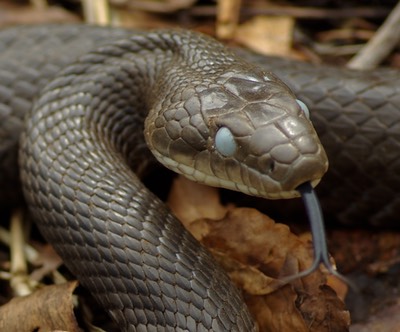
No matter how harmless and beautifully patterned, the sight of a snake sprawled on a shrub or lounging on the pavement near the front door is alarming to most people. Snake photos have been submitted to the Acton WildAware Facebook page by residents who have discovered and wondered about the following harmless common snakes: Garter snake(Thamnophis sirtalis), Northern water snake(Nerodia sipedon),Dekay’s Brown snake(Storeria dekayi) and Eastern Milk Snake(Lampropeltis triangulum). Along with residential neighborhoods in Massachusetts, where they sometimes turn up in yards and basements, native snakes occupy a wide range of habitats found here in Acton, including: fields, forests, wetlands, ponds, lakes, streams, rocky hillsides, farmland, and vacant lots. Within those habitats, snakes may travel along the ground, swim, climb trees and bushes, and venture below ground usually into burrows made by other animals.

Snakes’ bodies are covered with tough, dry scales, either smooth or keeled. The keeled scales have a raised ridge like the keel on the bottom of a boat. Snakes’ underbody scales are called scutes. Snakes’ strong muscles and flexible spines allow them to move along the ground in a few ways; by creeping in a straight line using their belly muscles; bunching and straightening in an S-shaped sine wave pattern and wriggling between obstacles on the ground such as rocks. Snakes lack eyelids and do not see well. They only have inner ears and do not hear sounds they way we do. They depend on their bodies feeling the vibrations in the ground from nearby movement. The snake’s forked tongue is its biggest asset for sensing its environment, hunting prey and avoiding predators. As the tongue flicks out it picks up molecules of matter and pulls them into two slots on the roof of the mouth called the Jacobson’s organ. The diet of snakes varies depending on their species and size and can include insects, worms, amphibians, fish, small mammals and occasionally birds. Snakes are also wary of being preyed upon by hawks, eagles, owls, raccoons, foxes and coyotes and sometimes other snakes.

From the Massachusetts Division of Fisheries and Wildlife, “All snakes receive some protection under the Fisheries and Wildlife Laws and Regulations of the state of Massachusetts. They are protected as important members of our native wildlife communities and as valuable natural resources. None of them may be taken from the wild for purposes of sale. Common species may be hunted, trapped or captured up to a possession limit of two. This “loophole” was deliberately left open so that budding biologists and snake enthusiasts could capture and study a few of the animals if they wished. However, many snakes do not adapt well to captivity. Curiosity can generally be satisfied through a few days of observation, after which the snake should be released in the same place it was found. The Commonwealth is very serious about protecting the priceless natural heritage these animals represent to present and future generations. To report any violations of our wildlife laws, call toll free: 1-800-632-8075. Due to their Endangered Species status, it is illegal to kill, collect, possess or even harrass the following snakes in Massachusetts: Timber Rattlesnake, Copperhead, Eastern Hognose Snake, Black Rat Snake, Worm Snake.”

What to do if you see a snake in your yard or home? Mass Audubon advises, “Suburban yards can provide good habitat for snakes, which may seek cover under stairways, shrubs, wood piles, stonewalls, and dense vegetation. In the vast majority of situations, it’s best to leave the snake alone.  Snakes occasionally enter homes in search of insects or rodents, or a place to warm up or cool off. Try to confine the snake to one room. If there is an exterior door, open it and allow the snake to find its way out. If not, gently sweep the snake into a cardboard box, and release it outdoors.”

Resources

Massachusetts Snake Guide-Massachusetts Division of Fisheries and Wildlife University of Massachusetts Extension: https://ag.umass.edu/sites/ag.umass.edu/files/pdf-doc-ppt/ma_snake_guide.pdf

Mass Audubon: http://www.massaudubon.org/learn/nature-wildlife/reptiles-amphibians/snakes/snake-species-in-massachusetts

American Museum of Natural History: https://www.amnh.org/exhibitions/lizards-and-snakes-alive/squamate-fun-facts

Snakes in Western Massachusetts: http://westernmassnaturalist.org/snake-behaviors/

Tom Tyning 2013 http://westernmassnaturalist.org/welcome/a-rattlesnake-island-in.html A Rattlesnake Island in Quabbin Reservoir?

Umass Amherst-Snakes of Massachusetts: http://www.masnakes.org/

BioKids University of Michigan-Kids Inquiry of Diverse Species: http://www.biokids.umich.edu/critters/Thamnophis_sirtalis/


Paula Goodwin is a member of the Acton Conservation Commission who introduced WildAware with Acton Natural Resource Assistant Bettina Abe. WildAware is a program sponsored by the Town of Acton Natural Resources Department that began in September and will continue through the summer of 2016. The purpose of WildAware is to educate the community about the existence and habits of wild creatures, and the goal is increased community awareness of shared habitats. For information, call 978-929-6634 or send email to nr@acton-ma.gov.

NARA Pond Ecology

May 4, 2017
By Bettina Abe

NARA Pond Ecology

The nine-acre pond at NARA park has a maximum depth of 12 feet.

The park and the excavation for the pond were shaped by bulldozers and excavators. Gravel was excavated to the underlying granite bedrock.

NARA pond is a self-contained, groundwater-fed ecosystem. It does not have tributaries flowing into it. During springtime high water periods, the pond drains through an overflow pipe, flowing into Nashoba Brook, part of the “SuAsCo” (Sudbury, Assabet, Concord River) watershed. NARA pond’s water level changes seasonally depending on precipitation.

The plant community in and around the pond creates habitat for many animals. Stems and leaves create microhabitats between the grains of sand and mud and the undersides of rocks and stones.

Burrowing larvae, mussels, snails and worms live in the mud and feed on the decaying plant matter. Marginal irises, cattails, and rushes are shelter and food for other animals. The leaves and flowers of water lilies float on the surface and have their roots in the mud on the bottom of the pond. Other submerged plants like milfoil are rooted in the mud and provide shelter, food and sites for egg-laying. They also produce oxygen that dissolves in the water.

Algae, photosynthetic creatures, grow in fresh water and are neither plant nor animal. Insect larvae and tadpoles eat the algae. There are essential microscopic organisms in healthy ponds such as Phytoplankton that inhabit the upper, sunlit layer of fresh water. They photosynthesize, create oxygen and sustain the aquatic food web. Zooplankton (crustaceans) eat the phytoplankton, and are a keystone species.

Plant eaters like snails and mussels turn plant matter into energy. They live on the river bottom and are filter feeders, straining plant food from the water.

Ducks and geese eat these herbivores and benefit from the plant energy stored in their prey. Great great blue heron, green heron, spotted sandpiper, mallard, mute swan, gulls, kingfishers, and egrets feed in the shallow edge waters.

Some animals begin life in an egg mass, metamorphose and leave the pond. The dragonfly egg hatches into a nymph and molts up to 15 times during 2 years of growth to adulthood! It’s a fierce predator crawling along the bottom eating other insects or small fish. It climbs up the stem of a plant and molts into a dragonfly, usually at night. They are superb fliers and hunters, with huge compound eyes, speeding over the water and consuming insects. Dragonflies are an indicator species. Their presence and multitude tells us about the overall health of a local pond.

The Phenomenon of Bird Migration

March 17, 2017

By Bettina Abe

The Phenomenon of Bird Migration

It’s hard to believe that spring is around the corner with a foot of snow in our yards. Stepping outside early on a winter morning as the warming sun rises, one hears birds calling like mourning doves, blue jays, cardinals, nuthatches, chickadees, crows, and titmice. These species keep us company even on the coldest days. Many ducks migrate south in the late fall and spend a few weeks on the ponds in Acton, such as buffleheads, blacks, and goldeneyes. These same species can be seen on Nagog Pond during the months of March and April on their return trip north.

How can one attempt to write just a bit about bird migration, a topic which ornithologists devote their careers to? This article will pose more questions than answers. Nevertheless, hobby birders are fascinated by tidbits of information, adding to our petite knowledge bases. We await the Massachusetts Audubon Christmas Bird Count and the annual spring migration bird walks with relish, in hopes of adding someone new to our “life lists.” We stock our feeders and scan the skies for both the familiar and the unusual visitors to our fields, ponds, forests and backyards. Though ornithologists do know a great deal about the phenomenon of bird migration, they continue to learn more. In this time of climate change, bird behavior patterns alter and numbers dwindle. Those who have indulged in the birding hobby for a while will smile as they recall when first they became interested in feathered friends; perhaps as a child, but for many, as adults. It’s hard to say what tipped us off. An article? A birder friend? For me it was the day a flock of cedar waxwings landed in my crabapple tree one February. I grabbed the bird book and proudly identified them. I caught the birding fever about the time my kids were avid Pokemon and Beanie Baby collectors.

The more one learns about the extreme athletic feat of migration, the more one can marvel at these remarkable animals. How do they possibly know the way? How fast do they fly? What routes do they take? How is it possible a ruby-throated hummingbird can fly across the Gulf of Mexico? What about storms and reduced visibility? Predators and planes? Drones and wind turbines? Skyscrapers? Pick up any field guide to North American birds such as Sibley, Peterson, National Geographic, National Audubon or Stokes. Next to each species will be a colored map indicating where each spends the seasons. An excellent resource is the Massachusetts Wildlife magazine, published quarterly by the Massachusetts Division of Fisheries & Wildlife. Taking up birding can lead one to venture into the great outdoors and onto Acton conservation land (www.actontrails.org), taking one’s mind off of politics or other stressful aspects of life. Acton Recreation offers a wonderful birding class each spring.

You may notice that the red wing blackbirds have already returned from their sojourns in the south. Song sparrows were trilling a week ago along Ft. Pond Brook before our recent March snows. Though some bluebirds do winter over here in Acton, many more will return from the south. The months of April and May are when songbirds come back in droves from Florida, Mexico, Central and South America; you can also see spectacular species like the indigo bunting or scarlet tanager arriving here to breed.

In an article about sea ducks by H W Heusmann (Mass.Wildlife No.3, 2015) titled “Longtails & Harlequins” he tells us that “…tens of thousands of Long-tails winter in Massachusetts’ Nantucket Sound. They roost there overnight, then fly out to the Nantucket Shoals at dawn. There they spend the day at sea feeding, then return to their roosting area at dusk.” And that “Long-tails are exceptional divers, and have been caught in gill nets in Lake Michigan at depths of 150 feet.” (Neither species is found in Acton; both are coastal species in Massachusetts.)

MassWildlife Magazine Issue No.4, 2015 contains an article by Norman Smith, who has studied snowy owls for 35 years, explains that they are sometimes cannibals, like to live at Logan Airport, feast on lemmings on the Canadian tundra, and can see prey 2 miles away! One owl tracked by satellite transmitter had traveled over 7,000 miles in just 9 months. A great place to see Snowy Owls during the winter months is Plum Island.

Once hooked on birding, you will share sightings with others and never run short of conversation topics, posing astute analogies for life about travel, endurance, faith, diversity and song.

Spring Fishing in Local Streams, Rivers and Ponds

April 13, 2017

By Paula Goodwin

A sure sign of spring is the sight of anglers at the edge of streams and ponds, or casting from boats on the water. Fishing is enjoyed by many people of all ages as a relaxing pastime. For residents new to the area, and for those just getting started, fishing conditions are best when the water level is high and temperature cool, as it is in April and May. There are many places to fish the local streams, rivers and ponds in Acton and Boxborough and the most sought after fish are trout. OARS collaborates with Concord Outfitters and the Greater Boston Chapter of Trout Unlimited to improve trout habitat and populations in the Assabet River.

According to the OARS website, “The aim of this project is to re-establish a self-sustaining population of brown trout in the river. Brown trout have historically been found in the mainstem Assabet and are a good choice for restoration because they can tolerate higher water temperatures – – typical of a larger river — than native brook trout can.” The Concord Outfitters website provides a River reports page with current USGS Water Level data and helpful notes about current flies of choice for fly fishing enthusiasts. This spring, Concord Outfitters has already stocked the Assabet River with trout. MassWildlife will be stocking Fort Pond Brook, Nashoba Brook and Guggins Brook with Rainbow and Brown trout within the next few weeks.

The history of state fisheries and hatcheries was shared by Dr. Ken Simmons of the Massachusetts Division of Fisheries and Wildlife (MassWildlife) in a speech he gave on March 27, 2014. Due to water degradation during the industrial revolution, Simmons said, “By 1856 the public outcry by the citizens of Massachusetts was so great that the very first commission was created with fish experiments and in fish culture. This early experimentation and public need to both heal and repopulate our fish population in our state eventually led to the creation of the Massachusetts Fish Commission in 1866.” With the creation of this commission, the first state trout hatchery was opened in the year 1868 in Wareham. Currently, there are four hatcheries in Massachusetts: in Belchertown, Sandwich, Sunderland and Montague. Along with stocked trout, local waters are habitats for a variety of other freshwater fishes.

During the June, 2016 Acton WildAware Bioblitz, resident Matthew Ashby contributed his findings:

•Assabet River in South Acton, upstream of the bridge by the Canoe Launch on Powdermill Road his list included Black Crappie, Smallmouth Bass, Bluegill, Fallfish, Redbreast Sunfish, and Pumpkinseeds; Brown trout (stocked). He also noted Brown caddisflies laying eggs on the water.

• Ice House Pond, likely 3 Pumpkinseeds guarding their nests and one Smallmouth bass about 7″ long.

•At the pond at Great Hill: an abundance of Pumpkinseeds, one big Smallmouth bass nearly a foot long.

•At NARA Park: Hundreds of Pumpkinseeds and dozens of Smallmouth bass.

• To fish Grassy Pond, Matthew recommends that you’d want to portage a canoe in unless your preference is to fish from the pier. He advises that for the most part Guggins Brook’s water level drops too low to hold fish after June.

Free, public access and parking are available! For Ft. Pond Brook:

* Jones Field, South Acton, behind the playground. After the Assabet River Rail Trail is finished, there will be parking at the trailhead opposite the South Acton Trail Station on Maple Street.

* Weekends only, on the bridge between Gates and Douglas Schools in West Acton. Do not go during school hours.

* Park on Carriage Drive and fish along Ft. Pond Brook along River Street. Put a sign “fishing along River Street” on the windshield so the Police know.

* Jenks Conservation Land, from the parking lot- walk down the trail and fish in Ft. Pond Brook down the trail.

* Fort Pond Brook-Mill Pond (impoundment) Park at 110 Main Street in a general municipal lot. For Nashoba Brook:

* Park at the end of Wheeler Lane and get a map of Nashoba Brook conservation land. There are places to fish. Ice House Pond – On Concord Road Assabet River:

* Acton Canoe Launch 65 Powder Mill Road NARA Pond in NARA Park Grassy Pond, in conservation land 236 Nagog Hill Road Guggins Brook Conservation Land, Boxborough

Resources:

A Guide to Eating Fish Safely in Massachusetts http://www.mass.gov/eohhs/docs/dph/environmental/exposure/fish-eating-guide.pdf

Massachusetts Fish and Wildife Guide to Hunting, Fresh Water Fishing and Trapping: http://www.eregulations.com/massachusetts/huntingandfishing/

Massachusetts State Fish Hatcheries http://www.masslive.com/news/index.ssf/2016/06/cold_water_state_fish_hatchery.html

Fish and Aquatic Conservation https://www.fws.gov/fisheries/nfhs/fish_production.html

Fishing in Acton and Boxborough http://www.mass.gov/eea/agencies/dfg/dfw/hunting-fishing-wildlife- watching/fishing/northeast-district-waters.html

OARS Fish Stocking http://www.oars3rivers.org/our-work/initiatives/fish-stocking

Massachusetts Fishing License: https://www.ma.wildlifelicense.com/IS/Customer/InternetCustomerSearch

Trout Unlimited in Massachusetts: http://ma-ri-tu-council.org/

Visit Massachusetts State Fish Hatcheries-information http://www.mass.gov/eea/agencies/dfg/dfw/about-masswildlife/state-fish-hatcheries.html

Massachusetts Organization of State Engineers and Scientists: http://moses-ma.org/story/fish-tale-moses-scientists-key-masswildlife-fish-hatchery-stocking-program